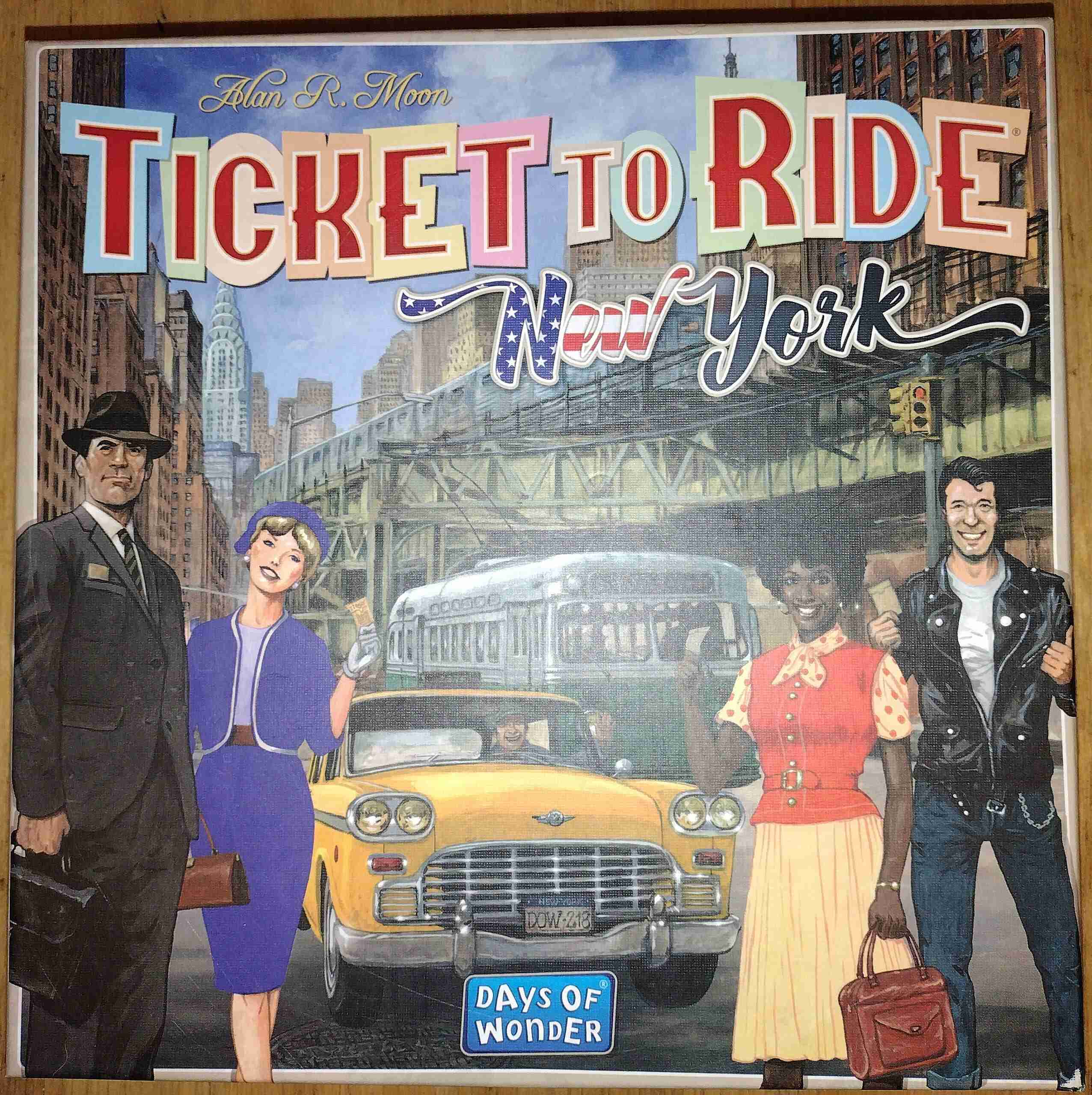
Do you love trains? Or geography? Or maybe you just love resource management games? Then Ticket To Ride is the game for you!
This post may contain affiliate links, meaning if you click on it and make a purchase I’ll receive a small commission at no cost to you. As an Amazon Associate, I earn from qualifying purchases. For more information, please check our Privacy Policy and Disclaimers and Disclosures.
There are several different versions of Ticket to Ride. We have the original (though I don’t think it got to come on the bus with us; I think it’s in storage with my in-laws) and New York. There is also Nordic, Europe, London, First Journey, Rails and Sails, Germany, Amsterdam, and San Francisco. There are also expansions. These require you to have either USA or Europe, but then come with a new map. Expansions include Asia, India, Poland, Africa, and several others. Like so many other games, there are also digital versions available.
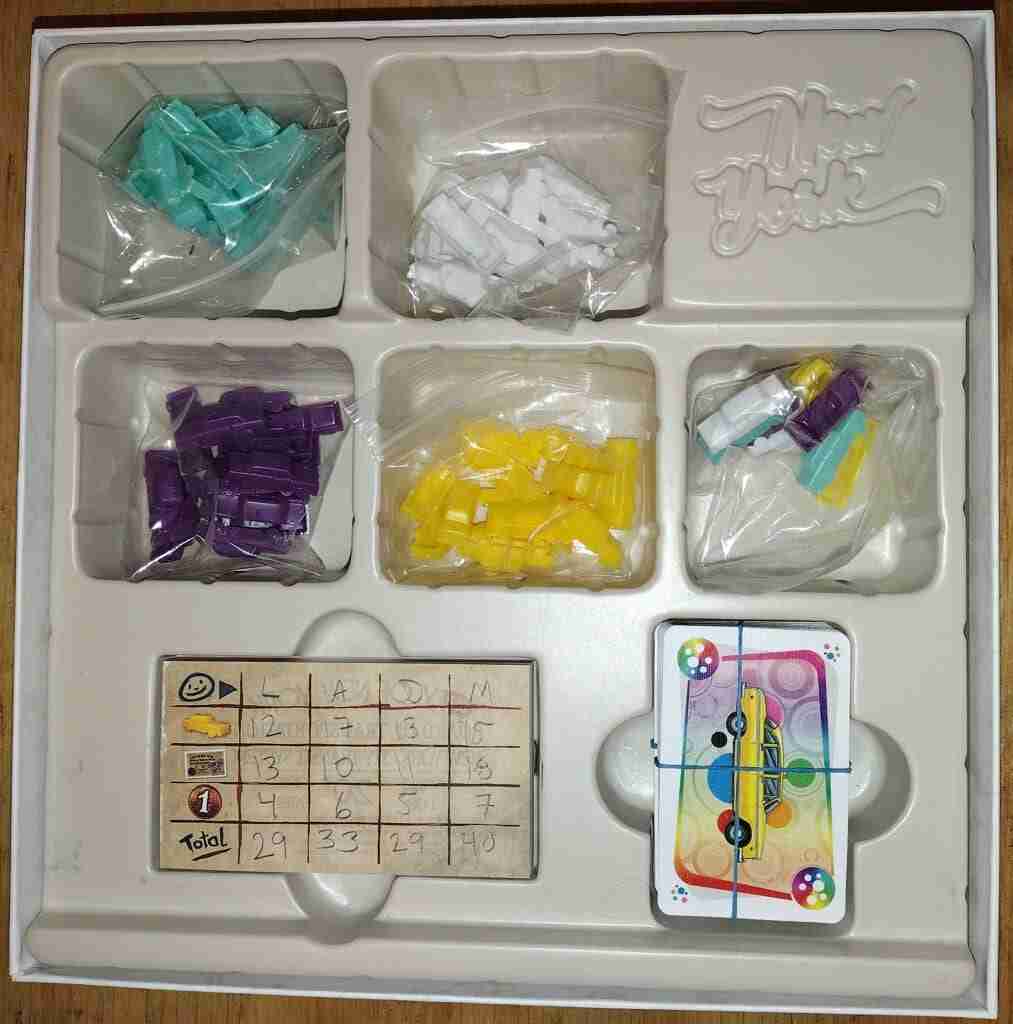
Depending on which version you are playing, the board may be very large, or quite small. The original (USA) board is large; nearly 2’x4′, but the New York board (and box) are significantly smaller. There are also trains of different colors, ticket cards, and train cards.

How to play Ticket to Ride
Between each of the locations on the map, there are train routes. Most of the routes are a specific color, but some are gray. If the route is gray, any color train card (as long as all cards used for that route are the same color) may be used. For example, on our New York map, we have a 3-train route from Lower East Side to Brooklyn. It’s gray, so I can use any color train ticket, but all three train tickets I turn in to claim the route have to be the same color. From Chinatown to Brooklyn, we also have three train routes, but one is orange and the other is pink. Only the correct colored train cards can be used on these routes.
Claiming routes

The different colored trains are to differentiate who claimed what route. New York has four colors, so up to four people can play. Both the original and Europe can be played by up to five players.
Ticket cards show, on a map, the start and end locations, as well as how many points they’re worth. Longer routes are worth more points, but if you don’t complete them, they subtract from your score. So they’re good to get early in the game, but toward the end, you might find you’re not able to complete the route. We have had this happen in games.
Favorite Ticket To Ride memory
When my son was maybe two years old, he had a baby sister that took a lot of my time. However, I made sure to put her to bed early (and luckily, she was a great sleeper as a baby!), and save the evening for my son. He went through a phase when his favorite thing to do was play Ticket To Ride. And no, I don’t mean First Journey; we didn’t have it. He was enamored with this game, and this was before we had very many games.
So I brought it down and laid it out on the ground (this was also before we had a dog or a rabbit). I heavily modified the rules, but my son had such fun. The cards in TTR are very small, which actually made them really easy for him to handle, I think. We only drew one ticket at a time and had open hands. Taking turns, and, just like in the instructions, we took just one action each turn. We also didn’t keep score, but just played until we had to put it away. So no, your child isn’t too young to introduce to Ticket to Ride!


A version for everyone!
Ticket To Ride is often seen as a bit of a gateway game; not quite as mainstream as Monopoly and Sorry!, but not as niche as Gloomhaven or Wingspan. Between Ticket to Ride and Catan, these games have done great things for introducing many people to the more exciting world of board games. Ticket to Ride is a fantastic game, and I’m sure you can find a version that’s perfect for your family!