
Checkers is perhaps THE best-known two-player logic game ever. And even better, it uses the same board as Chess, so you can get double the game-play taking up about the same amount of space.
This post may contain affiliate links, meaning if you click on it and make a purchase I’ll receive a small commission at no cost to you. As an Amazon Associate, I earn from qualifying purchases. For more information, please check our Privacy Policy and Disclaimers and Disclosures.
I loved introducing my kids to Checkers when they were small
You know that super-competitive phase around age 5, that makes playing so many games so hard? Well, Checkers was one of the few competitive games we could play together. The key is that in Checkers, if you can take the other player’s piece(s), you have to. My son, while competitive, has always been a bit of a stickler for the rules, and if you don’t take pieces when you can, you’re breaking the rules.
This game is also simple to play. When I started each of my kids with this game, I told (showed) them what each of their possible moves were, and what the consequences would be. Since all the pieces move the same, this is much easier than in Chess.

Checkers is called Draughts in Europe!
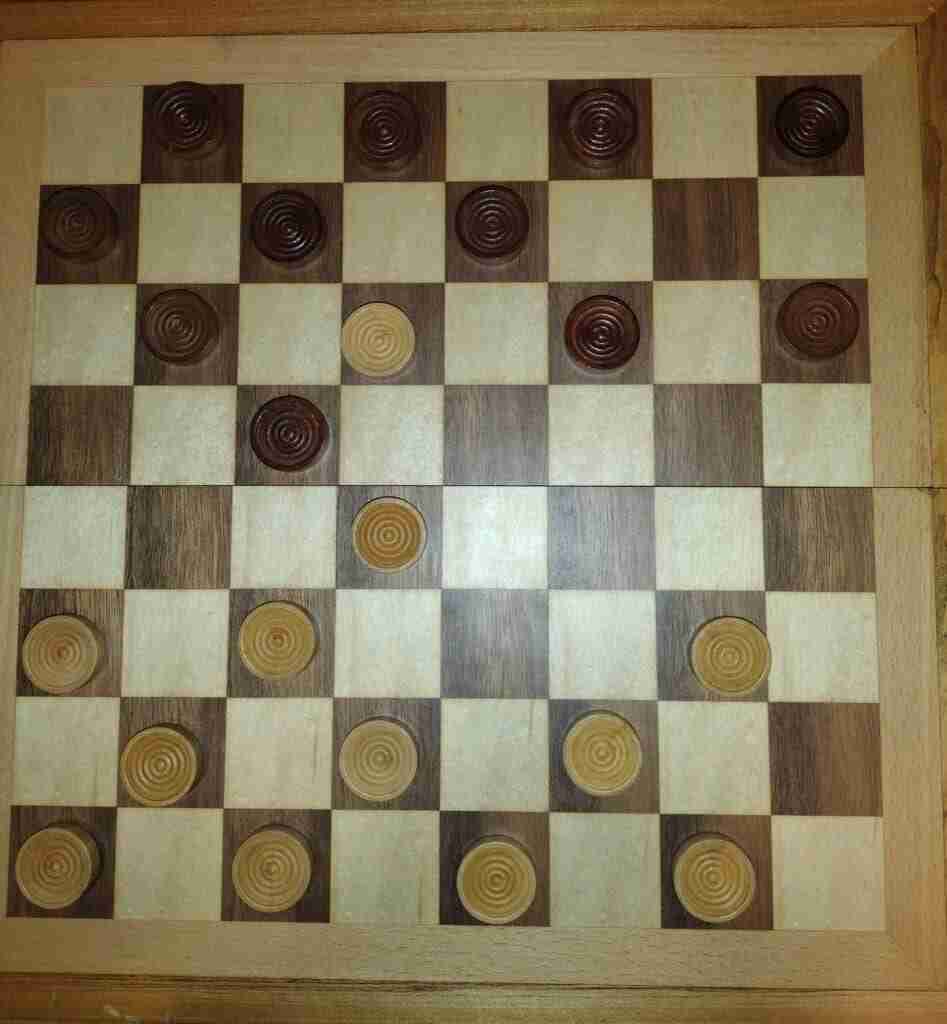
I’m sure that comes as no surprise to those of you living in Europe, or if you’ve traveled abroad more extensively than I have. But I had never heard this. According to my research, though, the two games are not necessarily identical. While American Checkers use an 8×8 grid (same as Chess) and each player has 12 pieces, International Draughts uses a 10×10 board and each player has 20 pieces. To further confuse me, though, English Draughts (I think) is the same as Checkers.
How many versions of Draughts or Checkers have you played? Does my explanation line up with your experience?
Like Chess, Checkers has a long history
Around 3,000 BCE, people in Ur, Iraq were playing a similar game. In 1400 BCE, Egyptians were playing a game called Alquerque, and this game remained popular for thousands of years. In the early 1100s, a Frenchman created Fierges (or Ferses), which seems to be the first instance of our modern Checkers.

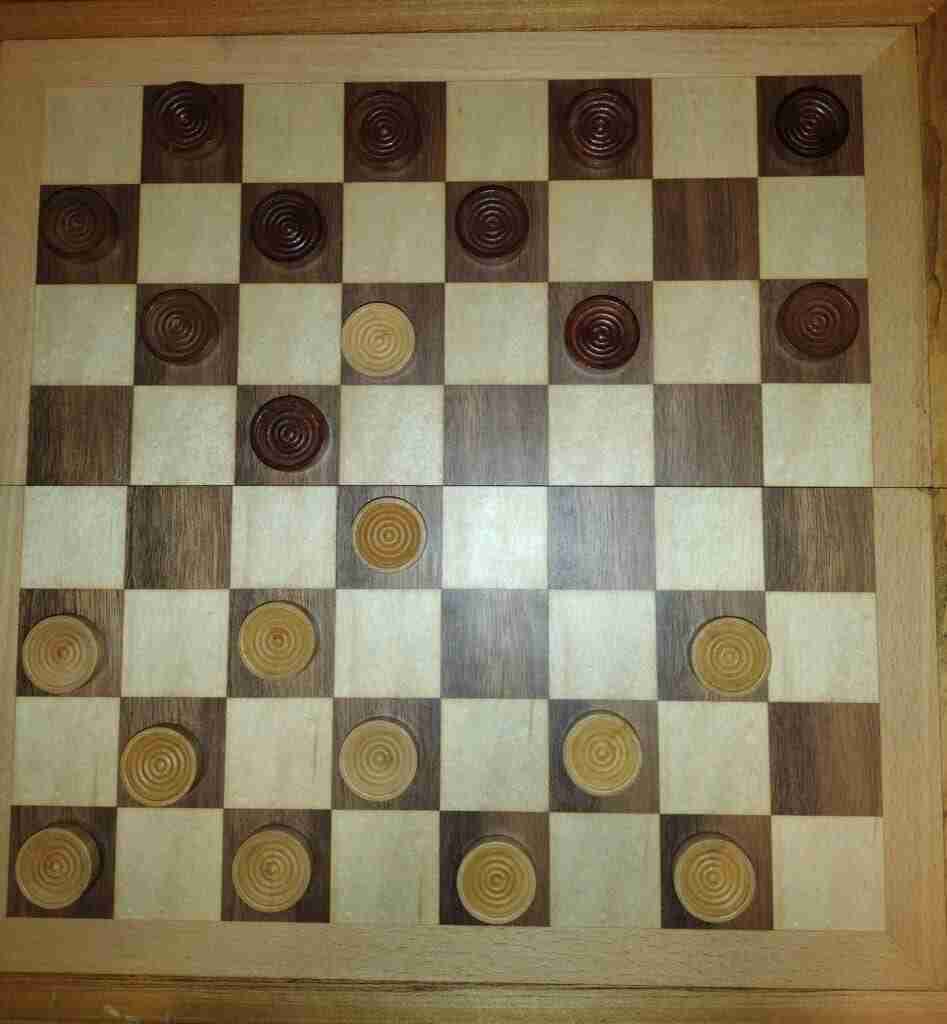
Whatever the case, though, I strongly encourage you to introduce your kids to Checkers! In my opinion, watching your kids develop their logical abilities is one of the highlights of parenthood.