
While digital clocks are more common than ever, analog clocks are still out there. Plus, I think they give a good visual representation of time that can be helpful. However, it can be tricky for kids to learn, which is where What Time Is It? comes to the rescue.
This post may contain affiliate links, meaning if you click on it and make a purchase I’ll receive a small commission at no cost to you. As an Amazon Associate, I earn from qualifying purchases. For more information, please check our Privacy Policy and Disclaimers and Disclosures.
What Time Is It? is a great game for teaching telling time on analog clocks to younger kids. Now, the gameplay is boring. Very boring. Think Candyland, but instead of candy, it’s times on clocks, and there are no shortcuts. There’s no strategy to speak of; it’s all luck-based.
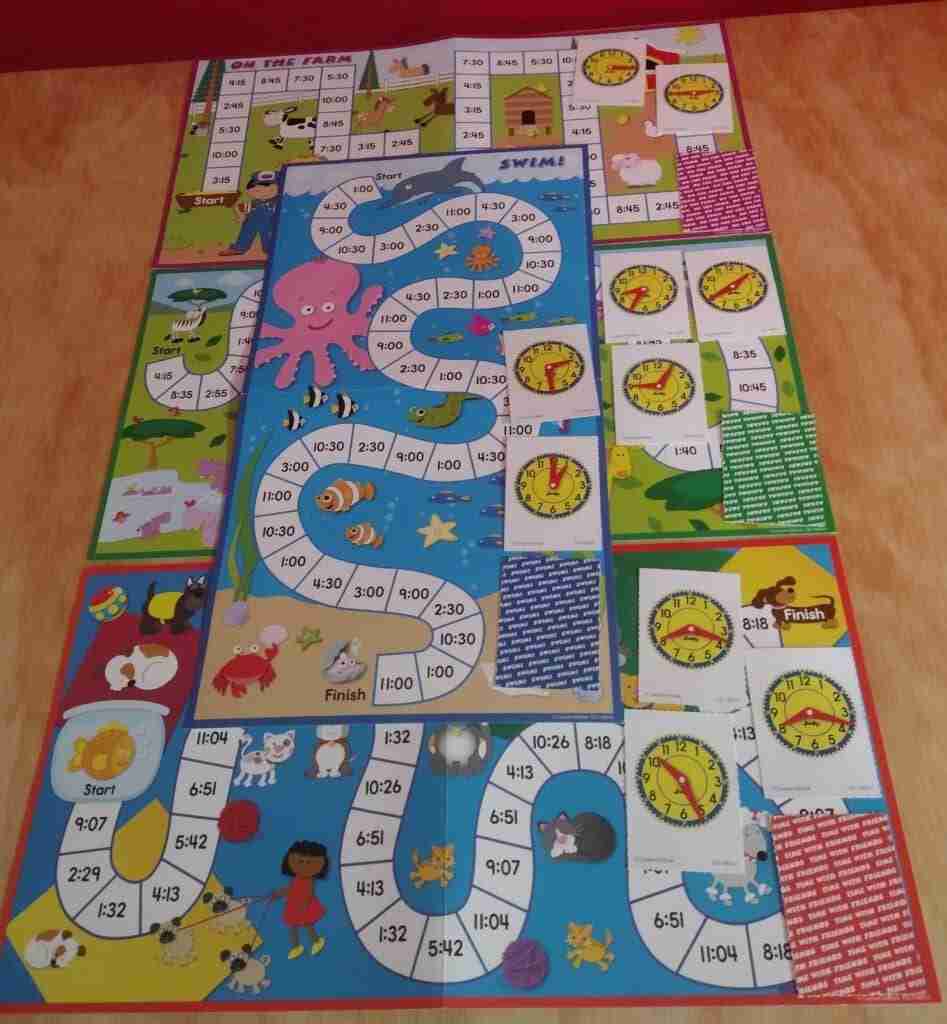
Now, for the bad. It’s cheap. The game boards are thin pieces of tag board, the cards are basically perforated construction paper that you have to separate. The player markers are non-functional; we immediately replaced them with generic pawns (early on in our gameschooling, we bought a large pack of extra pawns, mostly for printable and DIY games, but also super helpful for replacing or supplementing pawns). Did I mention this game is boring? It’s certainly not one I’ll pull out for a date night with my husband.
Why What Time Is It? is perfect for teaching time
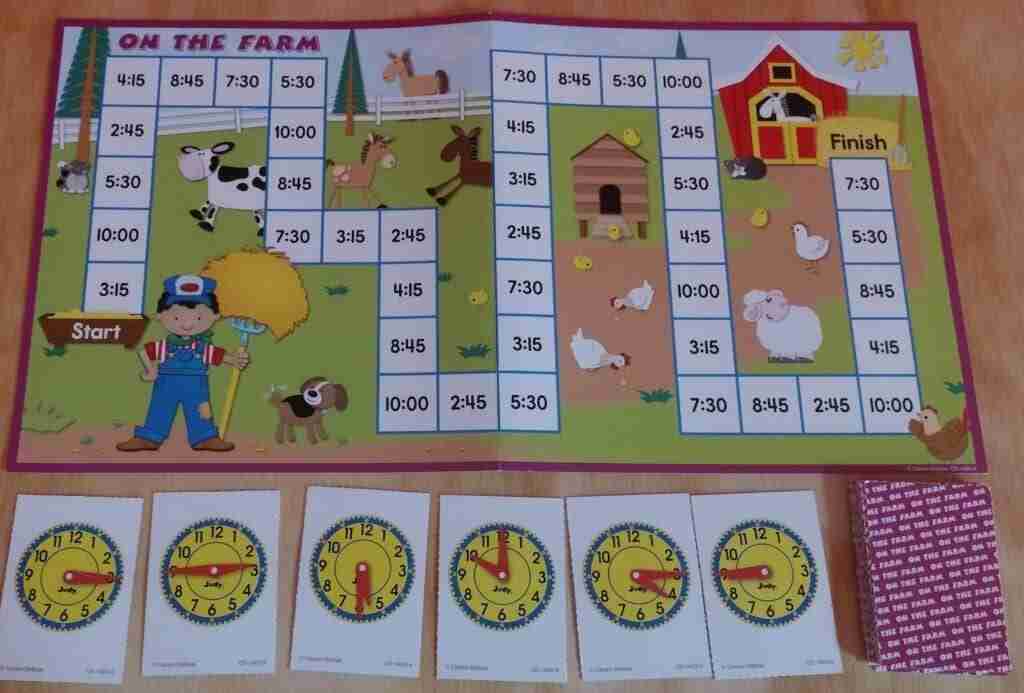
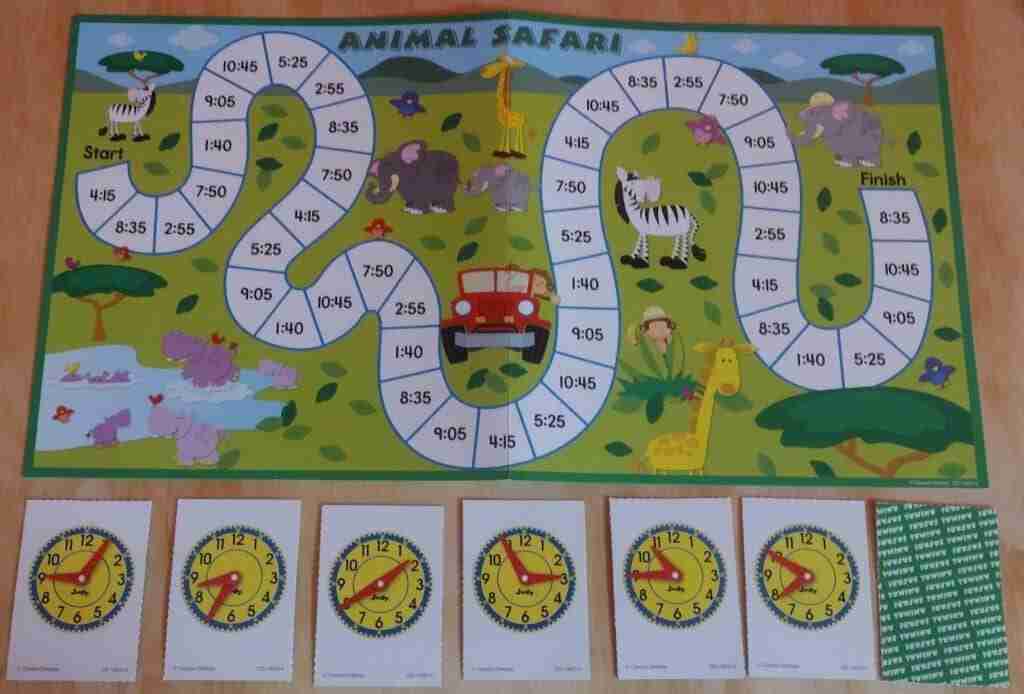
All that said, this game is EXCELLENT for what it is, and it has definitely helped my kids figure out how to tell time on an analog clock. My favorite part is that there are 4 different game boards, each with its own set of cards. So many things attempting to teach kids how to tell time start right off with the hardest times. Or they may start easy, but then jump right to the hardest times. I don’t know about your kids, but this never worked for my kids. But this game, with its 4 levels, has been perfect.
The first level has you telling time to the half-hour. Perfect starting point. They just have to decide what hour the hour hand is pointing to, then whether it’s at the hour or half-hour. My daughter started playing this level when she was about 4. The next level has them telling time to the quarter-hour. Perfect progression. The third game board has them telling time to every 5 minutes. This is where my son was when he was 7, the last time we played, and honestly, it’s probably about as far as is necessary. Finally, the last one has different random sorts of times, to the minute.


Using an analog clock
What really helped my kids figure out telling time on analog clocks, though, was getting an analog clock that had numbers around the face, and putting it at a lower level, that’s easier for them to see. Sure, I bump into it nearly every time I walk by, but it’s the easiest clock in the living room. The analog clock that I’ve had since before I had kids, and is pretty high up a wall, is a Circle of Fifths (a music theory nerd thing; the important point is that it has unrelated letters, not numbers, around the face). Not surprisingly, my kids never caught on to using that one. But our newer one they have totally used, and frequently.
Overall, this game is a win, for its very specific, intended purpose. It’s not one we choose to get out, but it beats the heck out of worksheets. Feel free to come on over to our youtube channel to check out our play-through video, too.